Monday, September 30, 2013

Poetry Writing Exercises


Agenda Adjustments Based on Informal Assessment
  • You are accountable for all work assigned in this class. Please remember that your poetry writing exercises do not need to be perfect, but an attempt at the assignments should be evident. 
  • Please turn in your poetry writing exercises (from the book.) We will make a separate pile- do not put in your portfolios. 
  • Label and date every assignment so I know that you completed the assignments given.
  • Write a 2-3 paragraph reaction to Collins and post as a response to today's post. This will be a grade, so if you haven't read, do this for homework. I would also appreciate it if you read the posts, so that you can learn from one another. Remember this is a collaborative workshop class.
  • We will save the exercises posted here for class on Wednesday.
HOMEWORK: Get caught up. Try one other chapter from your text- your choice this time. I will not assign additional reading in hopes that everyone can get on the same page (literally).


Agenda

1. Word of the Week/Poem
2. Collins Discussion3. Poetry Writing Exercises
4. Workshop time

*YOU MUST WORKSHOP WITH SOMEONE NEW. If you have been working with one other person, you could merge with another pair...

*The goal: You must have workshopped with everyone in the class by the end of the marking period.


Poetry Writing Exercises
from The Poetry Resource Page
www.poetryresourcepage.com/teach/pex.html
WRITING EXERCISES: POETRY

Alliteration Exercise
Make a list of twenty phrases that use alliteration, such as the sun settled on the south hill with sudden color. Pick two or three of these phrases and try to build images around them. Use at least one of these images in a poem.


Body Exercise
Make a list of fifteen physical experiences that you’ve had, such as falling out of a tree, riding a roller coaster, or jumping on a trampoline. Choose one from your list and use images to create a lyric poem about the experience.
(by Jay Klokker, from The Practice of Poetry, Robin Behn and Chase Twichell, eds.)


Body Part Exercise
Write a poem addressed to a particular body part. Make sure you maintain a consistent tone and focus.


Childhood Exercise

Try to remember everything you can about a particular event that occurred when you were a child. In can be any type of experience, now matter how insignificant. Make a list of all the details you can remember.

Once you’ve finished your list, build a narrative poem around it. Keep in mind that you don’t have to be faithful to the past. You can change details, descriptions, or actions if the change will make the poem work better.


Circular Poem
Write a short poem that begins and ends with the same line. The reader should feel differently about the line the second time around because of what has happened in the poem.


Confession Exercise
Write a poem in which you confess to a crime you didn’t commit. You can create the circumstances – perhaps you’re talking to a priest, or you’re being interrogated by police. Turn your confession into a narrative poem in which you describe the events leading up to your crime.


Construction Exercise
Write a poem in which you literally build or take apart something for the reader. Describe each step of the process for the reader, incorporating technical terms and descriptions of materials. Create a lyric or narrative poem that “shows” the reader how it’s done.
(by Deborah Digges, from The Practice of Poetry, Robin Behn and Chase Twichell, eds.)


Crime Exercise
Write a “confession” poem detailing an emotional crime and how you committed it.
ORWrite a poem in the voice of a murderer. Make the reader sympathetic to the murderer.


Death Exercise
Freewrite about the first experience with death you can remember, whether it involved a person or an animal. Then freewrite about your most recent experience with death. Combine the details, memories, and images from the two into a lyric or narrative poem.


Dream Exercise
Many people have recurring dreams – of flying, of being chased, of being in a particular location or situation. Write a poem about such a dream that uses repetition to capture its obsessive nature. Try to repeat fragments rather than simply initial words or complete sentences; let the repetition interrupt the flow of the dream-story.


Dying Exercise
Write a poem in which you speak after your own death. In it, describe what death looks and feels like. Describe how it feels to be conscious at the time of death, what your emotions are. Give advice to the living about how they should face death.


Elegy Exercise
Using the third person, write an elegy poem for yourself, imaging that you’ve just died at the age of ninety. Include a description of yourself, and things that you would like to be remembered for/by. You may want to include places you’ve been, inventions you’ve created, famous people you’ve met, your talent for singing or dancing or cooking, your favorite book or movie or color, where you had your first kiss, what you did for a living, how many times you were married, how many children you had, all the states or countries you’ve lived in, etc.


Endless Exercise
Write a poem of about thirty lines that consists of a single sentence. Experiment with clauses and phrases and parallel structure. Try to keep the sentence moving forward, enjambing it across lines in different ways, while making sure it is grammatically correct. This type of exercise will help you develop flexibility as a writer, teaching you new ways to phrase things and new ways to play with the syntax of a line.
(by Richard Jackson, from The Practice of Poetry, Robin Behn and Chase Twichell, eds.)


Erotic Exercise
Brainstorm a list of everyday activities, such as washing the dishes, chopping vegetables, mowing the lawn, going grocery shopping, etc. Choose one and describe it in precise detail, focusing on every action it requires, all the little sensory moments involved. Take all of these details and images and use them to write a lyric poem in which you make some everyday experience sound erotic.
ORChoose a landscape to describe. It can be any kind of landscape, but try something nontraditional – a junkyard or an empty parking lot. Use your descriptions and images to write a lyric poem in which you make the landscape seem erotic.


Good and Evil Exercise
The traditional imagery for good and evil is light and dark, white and black. Brainstorm a list of images called up by the two opposites. Then write a poem that reverses traditional expectations. In other words, write a poem about what is beautiful or inspiring about the dark, or a poem about what is awful or terrifying about the daylight.


Fairy Tale Exercise
Write a lyric poem in which you adopt the persona of a character from a fairy tale. For example, you could describe the way Snow White feels while she sleeps inside her coffin, or how the Prince feels as he holds Cinderella’s glass slipper in his hand.


False Memory Exercise
Write a poem in which you “remember” something that never happened. Use strong sensory images to convince the reader it really happened.


Family Exercise
Write a poem in which you adopt the persona of a parent or grandparent. Write the poem in the form of a letter addressed to your significant other. Describe your feelings for this person, the way they look and smell, memories that you have of them, where or how you met, etc.


Fear Exercise
Think of something you were afraid of as a child. Write a poem in which you describe what it was and how it made you feel. You can write from the point of view of an older person looking back on it, or you can write from the point of view of the child you once were.


Field Guide Exercise
Read the descriptions in a book of natural history or a field guide, such as a guide to birds, mushrooms, or wildflowers. Write a poem about a plant, bird, rock, animal, or fish from the book. Incorporate information from the book in the poem to help the reader identify your subject.


First Line Exercise
Take one line from a poem of your own that is unfinished or a poem by another poet. It does not matter where the line occurs in the poem, but you want to select the best line from the poem. Use this line as the first line of a new poem. Try to maintain the same quality of sound, language and thought that the first line presents.
(by Stephen Dunn, from The Practice of Poetry, Robin Behn and Chase Twichell, eds.)


Foreign Objects Exercise
Many poems arise out of everyday life – something you may have walked or driven by a hundred times and suddenly noticed for the first time. Part of learning to write poetry is learning to look around and observe both the ordinary and the unusual.

Exercise: Spend half an hour walking around outside (on campus or in a parking lot, for example). Pay attention to the objects you see. Make a list of five “foreign objects” (such as a Band-aid stuck to a stop sign or a scarf hanging from a tree).

Once you’ve made your list, try to imagine the story behind the object – how it ended up where you found it. Build a narrative poem around the object.
ORDescribe the scene in great detail – the landscape surrounding the object, then the object itself. Build a lyric poem around the object.


Function Exercise
Choose one object in your room and make a list of all of the ways you could use it, or all of the things you could do with it. For example, a glass can be used to drink from, to pour from, to collect rain water, to turn upside town and catch a fly under, etc. Turn your list of functions into a lyric poem, using the object as the title.
(by Jack Myers, from The Practice of Poetry, Robin Behn and Chase Twichell, eds.)


Gesture Exercise
Spend twenty minutes observing people in a public place. Make a list of the gestures that people make, no matter how subtle. For example, the way a child twirls her hair around a finger, or the way a woman tucks loose strands of hair behind one ear.

Choose one gesture and describe its motions in great detail. Build a poem around this moment and what you think it tells you about the person.


God Exercise
Write a poem to God. Make it a tirade, a complaint, a request.
ORWrite a poem as God. Let God explain, refute, deny, defend.
ORWrite a poem in which God is a traffic cop, a new anchor, a porn star, a grocery clerk.


Hands-on Exercise
Choose half a dozen small objects from around the house (like a fork, a toothbrush, or a stapler). Close your eyes and run your hands over each object. Write a description of what the object feels like, and how you think it looks. Use metaphor and simile to compare the feel or shape of the object to something else. When you have written descriptions for each of the objects, choose one to write a poem about. Describe the poem in such a way that a blind person could tell what it looks like.


History Exercise
The poet James Merrill wrote “we understand history through the family around the table.” Think about ways your own family’s story overlaps with the story of others – a historical event, an ethnic group, a social issue. Write a poem about someone in your family and how his or her story is related to history.
(based on an exercise by David Wojahn, from The Practice of Poetry, Robin Behn and Chase Twichell, eds.)


Home Exercise
Think about your childhood home, recalling the inside (hallways, rooms, closets, etc.) and the outside (the front yard, back yard, trees, swing sets, etc.). Focus on a place inside or out that was special to you. Describe the time you spent there, the things you did, the discoveries you made, the emotions you felt, why you went there, etc.


Imitation Exercise
Find a contemporary poem that you admire. Write a poem in which you imitate the style, tone, theme, sentence structure, etc. of the original poem. You may want to borrow the poem’s first line and use it to write a poem of your own. You may want to write on a similar topic – a childhood memory, describing an everyday object, providing a narrative for a photograph, etc.


Inanimate Object Exercise
Choose one inanimate object in your room. Describe what it looks like, and describe the room around it. When you’ve finished your descriptions, write a poem in which you adopt the persona of the inanimate object: what does it think, what does it feel, what does it look out at day after day after day, etc.


Interior Monologue Exercise
Write a poem in which you adopt the persona of someone famous (they can be dead or alive). Imagine this person sitting alone, looking out over the Grand Canyon at sunrise, reflecting on his or her life. Write a poem in which you convey this person’s character through his or her internal thoughts.


Isolation Exercise
Write a description pf one particular element of a set. For example, you can describe one book on a shelf, one face in a crowd, one bird on a telephone line, etc. Try to describe both the characteristics of the group/set, and to distinguish what makes the one member you’re focusing on different from the others. Turn your description into a lyric poem.

(by Michael Pettit, from The Practice of Poetry, Robin Behn and Chase Twichell, eds.)


Landscape Exercise
Go somewhere scenic – to a park or a lake, for example. Describe the landscape that surrounds you using sight, sound, smell, and tactile images. Build a lyric poem out of these images.
ORGo somewhere urban – downtown Chicago or St. Louis, for example. Describe the landscape of the city using sight, sound, smell, and tactile images. Build a lyric poem out of these images.


Letter Exercise
Write a poem in the form of a letter to someone who is dead. In it, make a confession about something you did to them when they were still alive.
ORWrite a poem in the form of a letter imagining that you are dead. In it, tell them something you meant to tell them while you were still alive.
(based on an exercise by Robin Behn, from The Practice of Poetry, Robin Behn and Chase Twichell, eds.)


Life or Death Exercise
Write a lyric poem in which you describe yourself being born. Describe what it feels like inside the birth canal, what it feels like as you push your way out, what you see, smell, hear or taste, etc.
ORWrite a lyric poem in which you describe the moment of your death. Describe how you feel as you take your last breath. Describe the last thing you see, hear, touch, taste, smell or feel. Describe who is with you, where you’re at, etc.


Metaphor Exercise
Take something negative about yourself – an abstract concept, like fear, depression, hatred, loneliness, or cruelty – and find a concrete image for what it feels like. Maybe it feels like a weight pressing down on your, like walking down a dark street at night, or waking up in an abandoned house. Once you decide on a topic and an image, draw out the image in a lyric poem with the topic as your title.


Newspaper Exercise
Read the newspaper. Pick one story from the paper, and write a poem in which you take on the persona of someone involved in the story. Write a narrative poem in which you tell the story from that person’s point of view.
(based on an exercise by Mary Swander, from The Practice of Poetry, Robin Behn and Chase Twichell, eds.)


Opening Lines Exercise
Below are the opening lines from some short stories and novels. Pick one that interests you and see what kind of poem it generates:
  • Come into my cell. Make yourself at home.
  • Night fell. The darkness was thin, like some sleazy dress that has been worn and worn.
  • There is an evil moment on awakening when all things seem to pause.
  • It was a pleasure to burn. It was a special pleasure to see things eaten, to see things blackened and changed.
  • “Notice the sensuous curve of the breast.”
  • God help me.
  • She lay in the dark and cried.
  • The big house was still, almost empty.
(from Writing Poems , Robert Wallace and Michelle Boisseau, eds.)


Personals Exercise
Write a persona poem in which you take on the personality of an older, single adult of the opposite gender. Write a poem in the form of a personals ad in which you describe yourself and your interests, and then describe the type of man or woman you would be interested in dating.


Personification Exercise
Look around your bedroom, kitchen, living room, or bathroom. Make a list of objects that seem to have moods or personalities. Choose five of them and create a description of each one’s personality or mood. Pick one of your descriptions and build a poem around it.


Pet Exercise
Write a persona poem from the point-of-view of your pet. Describe your environment, your day-to-day activities, the food you eat, where you sleep, where you use the restroom, the toys you play with, what you think about, the way your owner behaves, etc.


Photograph Exercise
Look through an old family album. Find a picture that you’re not in and write a lyric poem that describes the person and/or scene.
ORLook through a book of historical photographs. Write a lyric or narrative poem based on the person and/or scene.


Picturing Exercise
Think of someone in your family, imagining them doing something they typically do – like, your mother gardening or your brother sketching pictures under a tree. Freeze them there in your mind in an “imaginary” photograph. Describe the photograph as if it were real, using the details to reveal something about this person’s character.


Piece by Piece Exercise
Write a poem in which you describe an object – not in its entirety – but piece by piece. Do not say what the object is. Let the individual parts explain the whole.


Language Play Exercise
Make a list of twenty phrases in which you use words as different parts of speech, such as he turned to me with a shadowing stare or her kisses purpled his flesh. Once you’ve made your list, choose one phrase to build a lyric or narrative poem around.


Reflection Exercise
Look at yourself in a mirror for as long as you can stand it. Describe yourself in as much detail as possible. Build a poem around your own reflection: the way your body changes over time, the small details of your face that no one notices, the reality of “facing” yourself, etc.


Repulsion Exercise
Make a list of things you find repulsive – the smell of garbage, fast food employees, people who never shut up, etc. Choose one and write a poem in which you describe that person, place or thing in such a way that it becomes beautiful.


Sandwich Exercise
Find a short lyric poem you really like and type it on your computer, leaving three blank lines between each line of the poem. Print it out. In the spaces between each line, fill in a new line of your own that seems like it would sound right following the line original line before it. Once you have filled in all the spaces with lines of your own, cross out all the typed lines from the original poem. Revise the poem using only the lines that you have written.

(by J. D. McClatchy, from The Practice of Poetry, Robin Behn and Chase Twichell, eds.)


Scene Exercise
Sit in one place for fifteen minutes and write down everything you observe about the place: sights, sounds, smells, feelings, colors, temperature, lighting, etc.

Once you have a complete description, create a poem that develops a scene through a series of images.


Scissors Exercise
Take a poem that you’ve been working on but have been unable to get “to work.” Type it up, double-spaced, and print it out. Cut it into pieces – cutting so that phrases and chunks of sound or sense stay together. Throw away any extra parts, then take all of the “pieces” and try rearranging them in different orders. Add whatever you need, and keep moving things around until it “works.”
(by Chase Twichell, from The Practice of Poetry, Robin Behn and Chase Twichell, eds.)


Secondhand Memory Exercise
Talk with your parents or someone else who would know about your childhood. Try to find out something you didn’t know about yourself and then write about it as if you remembered it.


Sexual Metaphor Exercise
    THE GROUNDFALL PEAR Jane Hirshfield It is the one he chooses, yellow, plump, a little bruised on one side from falling. That place he takes first.
Using Hirshfield’s poem as a model, write a short (4-5 line) lyric poem that is a metaphor for sex, desire, or love.


Shame Exercise
Write a poem about an experience that caused you to feel a sense of shame.


Shape Exercise
Sit in one room and make a list of descriptions of various objects and their shapes. Try to be as exact as possible, and to make the description of the different shapes distinct.

Meditate on the shape and form of objects. Try to build a poem around one or the objects, a particular shape, or the idea of form.


Suspense Exercise
Write a poem in which you withhold the subject and verb for as long as possible; begin with a preposition or adverb, then pile up the phrases and clauses.


Syllabic Exercise
Write a poem that is composed of only one-syllable words, or a poem that alternates between one and two-syllable words.


Voice Exercise
Write a poem in which you take on the voice of one of the following:
  • A used napkin
  • A scalpel
  • A turtle turned upside down by a group of children
  • A washing machine
  • A framed photograph
  • A ceiling fan
  • An unopened letter
  • A remote control

Widow Exercise
Write a poem in the voice of a widow whose husband has drowned. Invent any story you like about how this happened – he was a fisherman who was washed overboard in a storm or he was in a boat that capsized.

Imagine that the widow, who now hates water, is forced to confront it due to circumstances beyond her control. Perhaps she goes to visit a friend who lives by a lake, or she must jump in a pool to save a child who has fallen in.

Write a poem in which you adopt the persona of the widow. In her voice, describe what you see and feel as you look out at the water.
(by Maura Stanton, from The Practice of Poetry, Robin Behn and Chase Twichell, eds.)


Window Exercise
Write a poem describing a scene outside your window. Do this even if your window faces a brick wall or a boring landscape; use your imagination to make it interesting.


Word List Exercise
Writing poetry teaches you to experience language in new ways, and the most important thing that you can do as a writer is to develop a relationship with words – to look at them individually, to learn how to see and hear and taste and feel the different textures of each word, and then to learn ways to weave words together into poems.

Exercise: Make a list of twenty-five of the most beautiful/sensual/or poetic words you can think of. (For example, some of my favorite words are: obsidian, wisp, hollow, trickle, iridescent, and flicker.) If you can’t think of any off the top of your head, flip through the dictionary.

Once you have your list of words, pick one to try to build a poem around. The word can be the title of your poem, part of an image, central to a narrative, or just a word in a line.

Thursday, September 26, 2013

Homework

If you didn't get a check list, stop down for one tomorrow.

For homework:


  • Read Collins through page 82. 
  • Try the the fourth exercise in your poetry writing books.
  • Figure out the process for at least one of the contests!
  • Get organized!


See you tomorrow!

Contests!

Here is the contest information that I have so far. Please choose one contest to focus on right now. Learn their entry requirements and start to organize yourselves. Young Arts will be optional, but the other two are mandatory. 

Young Arts: October 18th Deadline
Fee: $35.00
http://www.youngarts.org/apply

Penn State Lake Effect Poetry Competition: October 31st Deadline
http://news.psu.edu/story/287371/2013/09/12/lake-effect-national-high-school-poetry-contest-seeks-entries-grades-9-12

Bennington Young Writers Awards: November 1st Deadline
http://bennington.edu/youngwriterscompetition


Tuesday, September 24, 2013

Writinghood Link

http://writinghood.com/online-writing/six-questions-to-ask-after-reading-a-poem/

Catch Up Day/Billy Collins/Bennington

Good Morning!

 Sierra is going to begin class with her poet presentation.


We are going to use 1/2-1 period to get organized. I would like you to catch up on any work you owe and put it in your personal folders.

 We will spend the rest of class in small discussion groups. Please take notes for credit!

 Sailing Alone Around the Room Discussion

Some questions to discuss:

1. How can a title change the impact of a poem? Which of the poems you read stand out in this regard? Would you change any titles?

 2. Favorite poem(s)? What exactly did you like?

 3. Poem(s) you disliked? Why exactly?

 4. What do you notice about the author's style?

When looking at a specific poem you might want to ask yourself: (writinghood.com)

1. Who is speaking? What do you know about him/her?
 2. What is being said?
 3. How is it said?
4. Where does the poem take place? Where was it written?
5. When does the poem take place? When was it written?
6. Why? This question should be asked lastly, because if we bog ourselves down with the why while we are reading or just after reading, then we might create meanings that are not intended…or come away lacking understanding or enjoyment of the poem…which may cause us to judge it negatively…or abort further interest in it…causing us to be less open to other poems.

 Read more: http://writinghood.com/online-writing/six-questions-to-ask-after-reading-a-poem/#ixzz27fiWiP00

 Finally, please continue to workshop. I would like you to start thinking about which piece you plan to enter in the Bennington/Young Arts contests. Please bring a first draft (or draft in progress) to class on Thursday. Our short quiz will be on Thursday as well. Please review what we have discussed.

Friday, September 20, 2013

Homework

Dear Poets,

Thank you all for an amazing class! Our first circle of love was so much fun. I am sorry I was so obsessed with eating dunkin' donuts that I did not focus as well as I could. I am lucky you are all so smart that you can run the class yourselves if necessary.

Okay... HOMEWORK

  • Please continue to read Collins. I would like you to read through page 42. Be ready to discuss! 

  • Complete chapters 2 and 3 in your poetry writing books. Keep in mind they are just exercises--you do not have to love everything that comes out of these exercises, but you should give them your best effort. *if you did not finish today's exercise, please complete that too.*
Reminders:
  • You have 4 nights to do this work. Don't wait until the last minute!
  • Also... ON WEDNESDAYS, WE WEAR PINK.


                                          Have a restful weekend! See you on Tuesday!

Thursday, September 19, 2013

Don't forget to do your homework!

You need to read the first section of Sailing Alone Around the Room. You should read through page 19.

You also need to hand in the final copy of your ekphrastic poem (with evidence of workshop.)

Don't forget the poem in the style of the poet you researched (past due!)

Finally, you need to post a response to the William Carlos Williams poem, which I posted last class. Post your own response and give a meaningful reply to at least 3 people in the class in order to receive full credit. 

If you have questions, please ask!

Wednesday, September 18, 2013

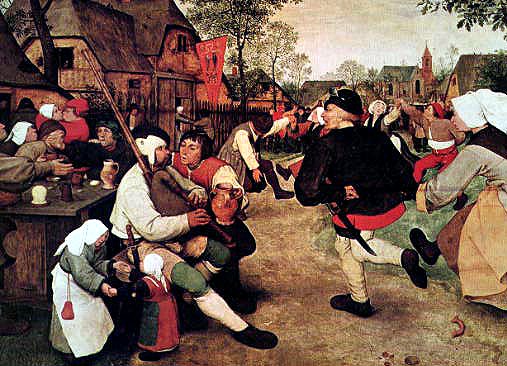
Ekphrastic Poem William Carlos Williams "The Dance"


“Poets are damned but they are not blind, they see with the eyes of angels.”
― William Carlos Williams
Note how Wiliams' poem mimics the rhythms of the dance...

William Carlos Williams

The Dance

In Brueghel's great picture, The Kermess,
the dancers go round, they go round and
around, the squeal and the blare and the
tweedle of bagpipes, a bugle and fiddles
tipping their bellies (round as the thick-
sided glasses whose wash they impound)
their hips and their bellies off balance
to turn them. Kicking and rolling
about the Fair Grounds, swinging their butts, those
shanks must be sound to bear up under such
rollicking measures, prance as they dance
in Brueghel's great picture, The Kermess.

Monday, September 16, 2013

Deadlines (past and present)

Journals

9/10: New title for Shirley Kaufman's Hope
9/10-9/12: Line Breaking/Self-Reflection Notes
Ongoing: Multiple Poems in Progress

Type/Submit

9/6: Group Poem, Signed Course Criteria Sheet, 1st Blog Post
9/12: Polished Poem, Evidence of Workshop, Baggage Switch Exercise
9/16: Poet Review with Examples of Work
9/18: 1st Draft of Ekphrastic Poem, Poem in the Style of Chosen Author

*Note: Word Bank for Poetry exercise was optional, but evidence of using prompts provided should be reflected in your notebooks.

If you have questions, please ask!

Sunday, September 15, 2013

Ekphrastic Poetry


Ekphrasis: writing that comments upon another art form, for instance a poem about a photograph or a novel about a film.  Keats' "Ode on a Grecian Urn" is a prime example of this type of writing, since the entire poem concerns the appearance and meaning of an ancient piece of pottery.

Thou still unravish'd bride of quietness,
    Thou foster-child of silence and slow time,
Sylvan historian, who canst thus express
    A flowery tale more sweetly than our rhyme:
What leaf-fring'd legend haunt about thy shape
    Of deities or mortals, or of both,
        In Tempe or the dales of Arcady?
    What men or gods are these?  What maidens loth?
What mad pursuit?  What struggle to escape?
        What pipes and timbrels?  What wild ecstasy?

Heard melodies are sweet, but those unheard
    Are sweeter: therefore, ye soft pipes, play on;
Not to the sensual ear, but, more endear'd,
    Pipe to the spirit ditties of no tone:
Fair youth, beneath the trees, thou canst not leave
    Thy song, nor ever can those trees be bare;
        Bold lover, never, never canst thou kiss,
Though winning near the goal - yet, do not grieve;
        She cannot fade, though thou hast not thy bliss,
    For ever wilt thou love, and she be fair!

Ah, happy, happy boughs! that cannot shed
    Your leaves, nor ever bid the spring adieu;
And, happy melodist, unwearied,
    For ever piping songs for ever new;
More happy love! more happy, happy love!
    For ever warm and still to be enjoy'd,
        For ever panting, and for ever young;
All breathing human passion far above,
    That leaves a heart high-sorrowful and cloy'd,
        A burning forehead, and a parching tongue.

Who are these coming to the sacrifice?
    To what green altar, O mysterious priest,
Lead'st thou that heifer lowing at the skies,
    And all her silken flanks with garlands drest?
What little town by river or sea shore,
    Or mountain-built with peaceful citadel,
        Is emptied of this folk, this pious morn?
And, little town, thy streets for evermore
    Will silent be; and not a soul to tell
        Why thou art desolate, can e'er return.

O Attic shape!  Fair attitude! with brede
    Of marble men and maidens overwrought,
With forest branches and the trodden weed;
    Thou, silent form, dost tease us out of thought
As doth eternity: Cold Pastoral!
    When old age shall this generation waste,
        Thou shalt remain, in midst of other woe
    Than ours, a friend to man, to whom thou say'st,
"Beauty is truth, truth beauty," - that is all
        Ye know on earth, and all ye need to know.


The Poet Speaks of Art

Introductory Remarks by Harry Rusche on Poets and Paintings

Ever since the Roman poet Horace set down in his Ars Poetica (c. 13 BC) the dictum "ut pictura poesis"--"as is painting, so is poetry"--the two arts have been wedded in the critical mind. Poets and painters sometimes turn to one another for inspiration, and the dialogue has been mutually beneficial. Painters and illustrators have often been inspired by literature, especially in the eighteenth and nineteenth centuries. The critic Richard Altick says, for example, that between 1760 and 1900 there existed around 2,300 paintings based on Shakespeare's plays alone. These Shakespeare paintings are only one-fifth of the 11,500 paintings on subjects and scenes from literature--and we are talking only about paintings done in England during those years! Sheer numbers indicate the influence of authors on artists. Listed in the section on additional readings are several books that discuss the relationships between art and literature.
The road runs both ways, of course, and writers turn as well to paintings for their inspiration. In the small anthology of poems and paintings exhibited here, some interesting questions arise as we contemplate the relationship between the poem and the picture. Is the poem simply an objective verbal description of the work of art, or does the poet make conclusions about what the painting means? Could you reconstruct the painting from the poem without actually seeing it? Why does the poet dwell on some features of the the painting and ignore other aspects of the picture? Do you agree with the meaning the poet "reads" in the painting, or do you think the writer misreads it or warps the scene depicted to personal ends?

To view examples, go to this link:
http://valerie6.myweb.uga.edu/ekphrasticpoetry.html
(Do not do the assignment on this website. Read the examples provided only.)

Thursday, September 12, 2013

Creating a Word Bank for Poetry

We are going to start class by taking a look at a poem provided by Mr. Graser.

Here are the guidelines for today's creative exercise:

Go to the following website:http://www.loc.gov/poetry/180

Read poems #1-7. If you have looked at these poems before, please find poems that you haven't read. 

As you read, choose 3 words from EACH poem and make a list. (The best way to do this is either in your journal – where you will get credit; or you may keep a word document open and minimized on the bottom of your screen to collect the words.)


Choose interesting or “powerful” words—words that draw YOUR attention; the best 3 single words in the poem. Avoid phrases.

Once you have a list with 21 words, use your word bank to create a poem of your own.

• You DO NOT have to use all 21 words in your poem.
• Your poem should make sense. Try to avoid sentence fragments. (Consider your character, setting, theme, conflict, etc. to help write a story...yes, even poetry has a story.)
• You may include as many OTHER words as you’d like.

When you are done with this exercise, continue to work on work shopping with your groups.

Please hand in all of your work by the end of class. 

Homework

Introduction
In this class you will learn many poetic terms and write a great deal of your own poetry.  However, there is still something to be learned by looking at the works of the "masters" of poetry.  What techniques and skills do they use?  What makes their particular styles unique?  How do they accomplish the difficult task of writing moving and meaningful poetry using the same tools that you have been using?

Task
Select a poet of your choice.  After reading and researching some of the poems by that poet, write a 1-2 page response examining what makes the works of that poet unique. You are also welcome to provide interesting biographical information, but please avoid copying and pasting from online sources. This should be an authentic learning experience.

Process: 
1.Select a poet of your choice.
2. Select 2-3 poems that are representative of your poet.
3. Write a short bio of the poet and response to their work (see task.)
4. Write your own poem using something you learned about your poet. (Please develop your poems fully!)

Tuesday, September 10, 2013

Baggage Switch Exercise/Self-Reflection


Baggage Switch Exercise:

Make a list of all the verbs used in one of your poems.

Swap your list with a partner.

Replace the verbs in your poem with some verbs from the list you receive.  You can change the tense and number.

DO NOT MERELY CHOOSE SYNONYMS. LOOK FOR SURPRISING JUXTAPOSITIONS.  FOCUS ON WORD CHOICE (DICTION)!


For homework please do the following: 

Take a look at your poems and read/think about the information below. Jot down anything you happen to notice in your notebooks.

1. Line breaking:

Speed:  Short or long?  Enjambed or end-stopped?

Sound:  Rhyme emphasized?  Emphasize or de-emphasize rhythm?

Syntax:  Does the poem have line breaks that are compatible with its syntactical units?  Where are prepositions placed--at the beginning or end?  If the line breaks are unconventional, what is the effect?

Surprise: When a line breaks at an unexpected place, what is the effect?  What is the strongest position for a word?

Sense: Do the line breaks add to the overall meaning or sense of the poem?  Do they further its argument (logical or sound sense)?

Space:  Do the line breaks represent the timing of the poem?  What do you gather about the poem based on its appearance?  Does the creation of stanzas organize the space of the poem?


2. Polish one of the poems workshopped in class today. Please keep all evidence of workshop for a grade.

Expect a quiz in the near future. Anything discussed in class is fair game.

How to Workshop Effectively

"The purpose of poetry is to remind us how difficult it is to remain just one person." 
                                                                                                          - Czeslaw Milosz 

 Joe Weil posted these goals for his students. His goals are what I hope for our poetry class too:

 1. To find out if they truly like poetry, or only write it to “express” themselves.

 2. Find out what their aesthetics are, the limits of their aesthetics, and how these may be expanded.

 3. Learn to be responsive to language both as written and performed text.

 4. Gain exposure to major poems without having to take a lecture class.

 5. Have a learning experience with their own minds and with the teacher far more concentrated than is usually possible in a class that consists of lecture, papers, exam.

 6. Learn to write daily, rather than waiting for the last minute. This means they are not feeling they are doing a lot of work, but are, in fact, doing far more—minus bibliography, and all that formal stuff.


How to Workshop a Poem

 Hopefully you had a chance over the weekend to work on some drafts of your poems and look over the guidelines for workshop. Please be reminded that a large part of your grade in this class has to do with the quality of feedback you provide your classmates. Please take this process seriously. 

Directions: Comment, in writing, on each poem that you are workshopping. Initial each comment. You will lose points if you fail to comment constructively on a peer’s paper. The creative writing environment relies heavily on input. Workshopping is a form of publication, and it is a time for you to receive feedback from others about your work. Consider the following when reviewing a peer’s work:

o Is the diction (word choice) appropriate for the topic?

o Does the poem have a rhythmic feel to it? Does it flow? Why or why not?

o Is there something that isn’t clear or that you don’t understand? o Is there enough detail? o Not enough detail?

o Is the language descriptive?

o Is there too much description?

o Is the language used effectively? Why or why not?

o Is the pace too slow? Too fast?

o Is the voice clear?

o Is the spelling correct?

o Are there grammatical errors?

o What words, lines, or stanzas move you? Why?

o What words, lines, or stanzas puzzle you?

Read through the poem a couple of times until you get a sense of what the poem is trying to do. Some things you can look for (in terms of suggestions): places where what the author is trying to say is unclear, places where the phrasing is awkward and needs to be reworded, places where you think a better word might be appropriate, line breaks that interfere with comprehension, places where you think more description or detail is needed, or anything else you feel the author should be aware of. Some things you can look for (in terms of letting the author know what’s working): strong images, effective similes or metaphors, effective line breaks, fresh or imaginative descriptions or details, moving or insightful ideas, or anything else you liked about the poem. You should also make use of the “Holding the Poem in Question” handout, which is a list of questions you can ask yourself when trying to generate feedback for a poem.

Wednesday, September 4, 2013

Welcome to Advanced Poetry!


This semester course is for senior Creative Writing students interested in studying the art of poetry and writing original poetry. An open mind and supportive attitude will be essential as we workshop each other’s poems. We will be exploring several approaches to the art of writing poetry through a variety of different exercises to generate poems in open and closed forms.

Please take some time to journal and reflect on your personal definition of poetry. What is poetry to you? Why does the creative writing we do matter? Whenever I ask myself this question, I always refer back to a letter written by my own poetry teacher, Jack Ridl. He wrote:

"... let's also remind ourselves that while it can be good to do good and good to combat what destroys the good, it is also crucial that we continue to create good. We are creative beings. We arrived with that as a given. And when you create a poem, you have placed good into the world... We artists are questioned over and over again about our "usefulness." We are vitally useful. Our use is to heal, comfort, to lead to realization, to bring laughter, to sing the blues, to celebrate, to be of soul-filling USE. This is a great good thing we do. 

The Christmas after 9/11 Sharon Dolin, Billy Collins, and I were asked to read our poems in NYC. Can you imagine how we felt? What could we possibly do to be of any "use"? We told those present that we would do what we could to give them two hours for their hearts, souls. And that's all we could do. After the reading, the audience stayed and stayed and said how much that two hours mattered."

I hope you know how much your poems matter!
We are going to take a look at a poem or two by Billy Collins today.

Some bio information:
http://www.poetryfoundation.org/bio/billy-collins#poet

Video of Collins reading "Names" and reflecting on 9/11
http://www.poetryfoundation.org/features/video/301

You can listen to "Workshop" here:
http://www.poets.org/viewmedia.php/prmMID/19755

You can read here:


Workshop

By Billy Collins b. 1941 Billy Collins
I might as well begin by saying how much I like the title.   
It gets me right away because I’m in a workshop now   
so immediately the poem has my attention,
like the Ancient Mariner grabbing me by the sleeve.


And I like the first couple of stanzas,
the way they establish this mode of self-pointing
that runs through the whole poem
and tells us that words are food thrown down   
on the ground for other words to eat.   
I can almost taste the tail of the snake   
in its own mouth,
if you know what I mean.


But what I’m not sure about is the voice,
which sounds in places very casual, very blue jeans,   
but other times seems standoffish,
professorial in the worst sense of the word
like the poem is blowing pipe smoke in my face.   
But maybe that’s just what it wants to do.


What I did find engaging were the middle stanzas,   
especially the fourth one.
I like the image of clouds flying like lozenges   
which gives me a very clear picture.
And I really like how this drawbridge operator   
just appears out of the blue
with his feet up on the iron railing
and his fishing pole jigging—I like jigging—
a hook in the slow industrial canal below.
I love slow industrial canal below. All those l’s.


Maybe it’s just me,
but the next stanza is where I start to have a problem.   
I mean how can the evening bump into the stars?   
And what’s an obbligato of snow?
Also, I roam the decaffeinated streets.
At that point I’m lost. I need help.


The other thing that throws me off,
and maybe this is just me,
is the way the scene keeps shifting around.   
First, we’re in this big aerodrome
and the speaker is inspecting a row of dirigibles,   
which makes me think this could be a dream.   
Then he takes us into his garden,
the part with the dahlias and the coiling hose,   
though that’s nice, the coiling hose,
but then I’m not sure where we’re supposed to be.   
The rain and the mint green light,
that makes it feel outdoors, but what about this wallpaper?   
Or is it a kind of indoor cemetery?
There’s something about death going on here.


In fact, I start to wonder if what we have here   
is really two poems, or three, or four,   
or possibly none.


But then there’s that last stanza, my favorite.
This is where the poem wins me back,
especially the lines spoken in the voice of the mouse.
I mean we’ve all seen these images in cartoons before,
but I still love the details he uses
when he’s describing where he lives.
The perfect little arch of an entrance in the baseboard,   
the bed made out of a curled-back sardine can,   
the spool of thread for a table.
I start thinking about how hard the mouse had to work   
night after night collecting all these things
while the people in the house were fast asleep,   
and that gives me a very strong feeling,
a very powerful sense of something.
But I don’t know if anyone else was feeling that.   
Maybe that was just me.
Maybe that’s just the way I read it.
Billy Collins, “Workshop” from The Art of Drowning. Copyright © 1995 by Billy Collins. All rights are controlled by the University of Pittsburgh Press. Reprinted with the permission of the University of Pittsburgh Press, www.pitt.edu/~press/.
Source: The Art of Drowning (1995)

Please post a reaction to the information/poems provided today and/or the value of workshopping our own poems in this class. Develop your thoughts and respond to others in order tio receive full credit!


Please join this blog and comment on this post for credit!